
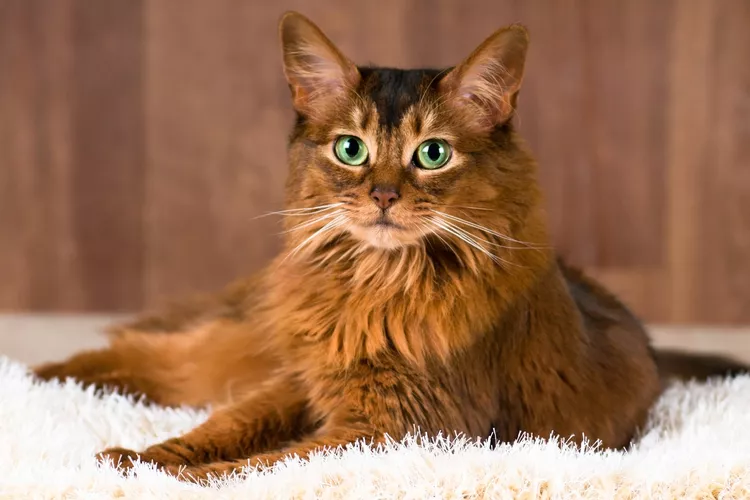
The Somali cat is an active, intelligent, medium-sized breed with luscious locks and an athletic build. Known for their playfully curious nature, they enjoy interacting with humans and do not adjust well to boredom. Somalis make wonderful companions for people who spend most of their time at home or have other pets to keep these cats company.
Learn more about the Somali cat breed, including temperament, history, and care needs.
Breed Overview
Other names: Fox cat
Personality: Playful, intelligent, sociable, affectionate, mischievous
Weight: Up to 12 pounds
Length: Up to 26 inches
Coat Length: Medium-long hair
Coat Colors: Red, ruddy, blue, fawn, and sorrel
Coat Patterns: Ticked
Eye Color: Green or gold
Lifespan: Up to 14 years
Hypoallergenic: No
Origin: Australia
Somali Cat Characteristics
You'll rarely find a Somali lying around—this cat has energy to burn! With an active, curious, and sociable personality, the Somali is always looking for something to do and someone to do it with. These cats may create their own entertainment if left unsupervised or under-stimulated for too long. Climbing curtains, scaling the refrigerator, or tipping knick-knacks off shelves are just a few of the fun activities that may be on the menu. Svelte and muscular, the long-haired Somali is beautiful to behold, which may make up for some of their antics when left alone. Solitary Somalis are notorious mischief-makers. The Somali is very affectionate but does not like to be held; they are not known as cuddlers.
History of the Somali Cat
The Somali cat has a rather mysterious history but is essentially a longer-haired version of the Abyssinian. Some experts theorize that a recessive gene was introduced into the Abyssinian breed population in the early 1900s through crossbreeding with long-haired cats of unknown origin.
Somali cats in the U.S. can all be traced back to a cat named Raby Chuffa of Selene. Originally from Great Britain, this was one of the first known carriers of the long-haired gene. Soon, enthusiasts began actively developing Somalis as an individual cat breed. All major cat associations now recognize the unique and relatively rare Somali cat breed.
Somali Cat Care
The Somali cat is not too difficult to care for. They'll only need a little more grooming than short-haired cats. Your main focus should be providing opportunities for exercise and mental engagement.
Grooming
Somali cats have soft, silky coats that require regular brushing (once or twice a week) to keep their coats free from tangles. Somali cats often enjoy being groomed, which makes the job much easier.
These cats also benefit from regular tooth brushing because they are prone to periodontal disease, and occasional veterinary dental cleanings will also help prevent the development of gum or tooth issues.
Exercise
Rambunctious, intelligent, and active, Somalis have relatively high exercise needs compared to other cat breeds. Play with your Somali multiple times a day to help burn energy and strengthen your bond with your cat.
If you’re feeling adventurous, you can take your Somali cat on leashed walks using a harness. Somalis love the outdoors and spending time with their humans, so this is a win-win. And because Somali cats are so smart and eager to exercise, they are easily trained. They are known to play fetch on occasion and learn words like "sit" and "stay". Just make sure to keep training sessions positive and rewarding.
Common Health Problems
Like their Abyssinian relatives, Somalis are susceptible to two particular hereditary health issues:
- Pyruvate kinase deficiency, which can cause anemia
- Progressive retinal atrophy, an eye condition that causes progressive blindness in cats
If you’re purchasing your Somali from a breeder, ask for proof that their cats are free of these conditions before committing to buy.
Like most other cat breeds, the Somali is prone to plaque and tartar buildup, which can lead to periodontal disease.
Appearance
Somalis are stunning cats with flowing, soft coats and muscular bodies. While the coat is medium length over most of their bodies, they have longer, fluffy tails and tufts of hair between their toes. Inspired by their ruddy coloration and plumed tails, these cats have been called "fox-like" in appearance. Somalis have large ears and eyes that always seem alert and attuned to any activity going on around them.
Diet and Nutrition
Because Somalis are so active and muscular, they need high-quality cat food with plenty of protein to remain in good shape. Stick to foods with quality meat-based ingredients and avoid ones with unnecessary fillers or grains with little nutritional value.
Your best resource is your veterinarian. They will be able to let you know which foods will be best suited for your Somali cat.
Where to Adopt or Buy a Somali
Somalis are a relatively rare breed, but the Somali Breed Council maintains a directory of reputable breeders. The average price ranges from $1000 to $1500. If you don't care about a registered cat, then you may find a Somali mix or a cat that closely resembles a Somali for adoption at a shelter. Check Petfinder for cats with Somali characteristics.
Somali Overview
With regular exercise and enrichment to tire out their minds and bodies, Somalis are less likely to get into trouble in the house. But if you leave your Somali home alone for long, you may return to ripped-up tissues or a dumped-over garbage can. Luckily, this rascal of a cat is easy to love because they are as charming and personable as they are beautiful. Somali owners count themselves lucky to share their lives with such entertaining and interactive felines.
Pros of the Somali
- Easy to train
- Affectionate
- Entertaining to interact with
Cons of the Somali
- Mischievous when bored
- Prone to certain health problems
- Rare; may be hard to find
More Cat Breeds and Further Research
If you’re interested in similar breeds, check out:
Otherwise, check out all of our other cat breed profiles.
-
Are Somali cats aggressive?
Somali cats are not known for aggressive behavior. They're typically very friendly and like to explore and play.
-
Are Somali cats expensive?
A Somali cat from a reputable breeder costs between $1,000 and $1,500.
-
Do Somali cats cuddle?
While Somalis are very friendly and personable, they aren't always interested in being held and prefer to cuddle on their terms.