
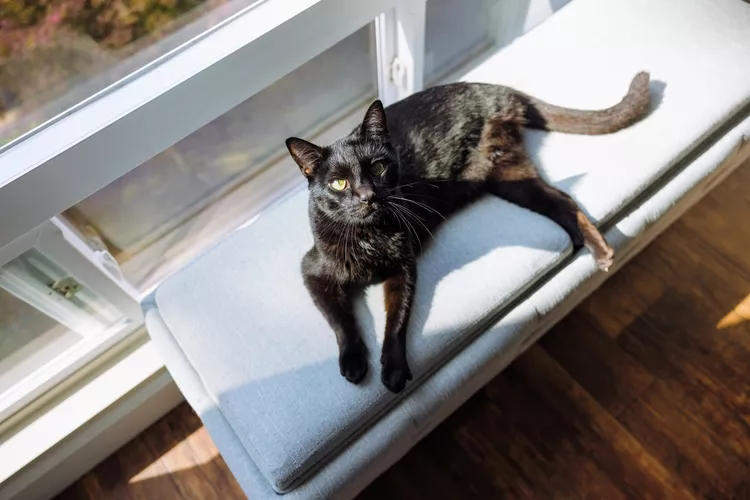
Cats may seek out warm spots during the winter but in the summer, quite the opposite is often true. Heatstroke is a real concern in summer months and cats can quickly get overheated if their body temperature gets too high. Warm summer weather can easily be a contributing factor and overheated cats may be open mouth breathing, lying on their sides, panting, have red gums, and be lethargic. These signs may indicate heatstroke and require immediate veterinary attention. Thankfully it's easy to prevent your cat from getting too hot with a few simple solutions.
The following tips can help keep your cat cool in summer and prevent heatstroke.
- 01 of 08
Airflow
Air conditioning, standing fans, open windows, and ceiling fans all offer airflow that aids in keeping your cat cool. Air conditioning is the most effective option you can provide for your indoor cat but if that isn't an option for you, ensuring a breeze and regular air circulation can help
- 02 of 08
Cooling Mats
Special cooling mats can be purchased for your cat to lie on in the summer. These mats are made of fabrics that will help keep your cat cool indoors, and some even contain special interior components like gels and foams.
- 03 of 08
Window Curtains and Blinds
Simply closing the curtains or blinds on a window will help block any sunlight from entering the room where your cat is lounging. This will help keep that room cooler for you and your cat, especially if you don't have air conditioning.
- 04 of 08
Shade
If your cat goes outside at all, offering a cat house for them to retreat to and get some shade is a must. An outdoor cat house also doubles as a place to stay warm in the winter months, so it can be used year round.
Be sure your cat can easily get in and out of the shelter on its own as these confined spaces can sometimes heat up unexpectedly if the sun moves. Give your cat access to clean, cool water if they are outside on a warm day.
Continue to 5 of 8 below - 05 of 08
Tiles
If your home has tile floors, you have a built-in way to keep your cat cool. Tiles are naturally colder than carpets and wood floors, so you may find your cat spending more time on the tile if their seeking a cool spot to relax. If you don't have tile in your home, you can purchase a couple of large tiles from a home improvement store and simply place them on your carpet for your cat to lie on.
- 06 of 08
Flowing Water
Cats are more likely to drink more water if the water is moving, so a cat water fountain is a great way to keep your cat hydrated and cool.
- 07 of 08
Haircuts
If your cat has long hair or a thick coat, a haircut may help keep them cooler in the summer. Lion cut haircuts are popular for Persians, Himalayans, and other extra fluffy felines, but even a trim can help. Use a professional groomer if you do not have the proper equipment and know-how to give your cat a haircut. If your cat spends a lot of time outdoors, this may not be a good choice because their fur also protects against sunburn and insect bites.
- 08 of 08
Wet Food
In addition to flowing water, you can feed wet food to help your cat get more hydration. Wet food has a higher moisture content than dry, so it's a great option if your cat doesn't drink enough water and is prone to dehydration.
-
Can cats get heatstroke?
Yes, cats can become overheated and develop heatstroke if they are unable to cool off. This can occur if they are in too warm of an environment.
-
What are the signs of heatstroke in cats?
Signs of heatstroke in cats include panting, open mouth breathing, lethargy, lying on the side, and even vocalizing. These symptoms are serious, and you should seek veterinary attention immediately.
-
How can I tell if my cat is too hot?
A cat's normal rectal body temperature is 101-102.5 degrees. If it doesn't stress your cat out, you can use a thermometer to take your cat's temperature to see if it is above 102.5 degrees. You can also feel your cat's ears and paws to see if they are warm and monitor them for signs of heatstroke.